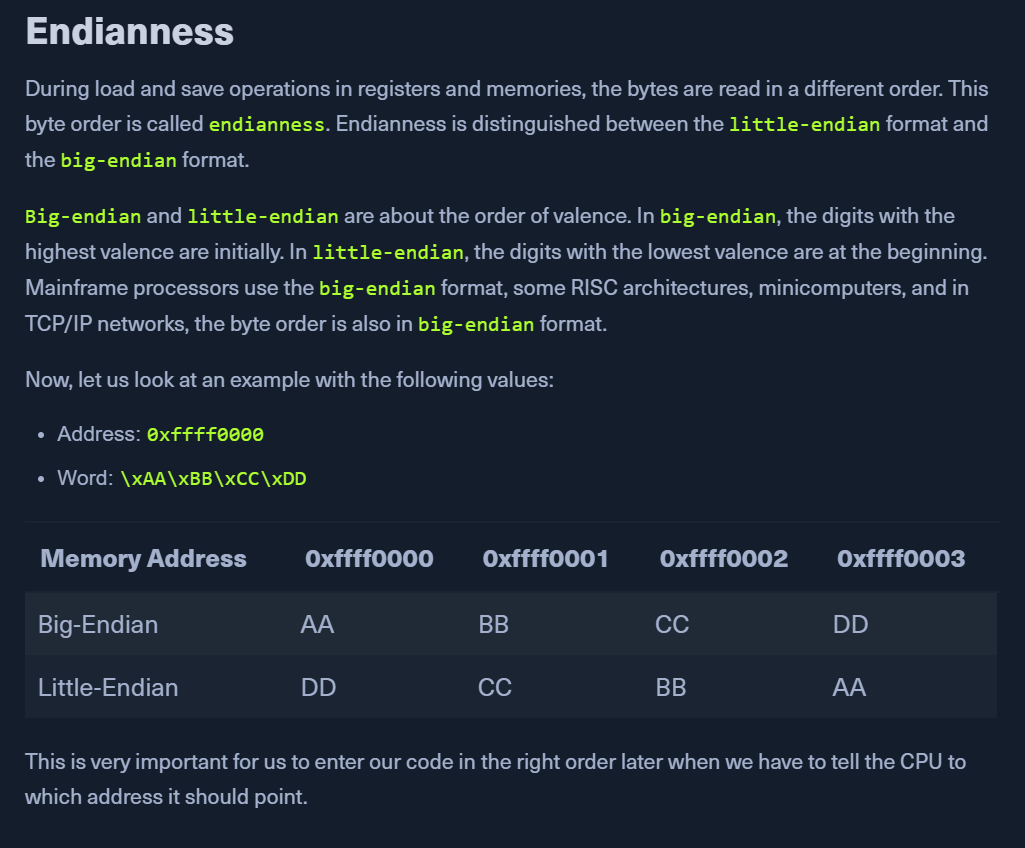
CPU Registers
- https://www.youtube.com/watch?v=ySOm8CdpnXI&ab_channel=PaladinGroup%2CLLC
- https://www.youtube.com/watch?v=_D8eLCmlrS8&list=PLdVIvW2RPTRxNdJeBZRcdt1JQJlmQlQMU&ab_channel=flipthebit
- https://youtu.be/1S0aBV-Waeo
- registers are the essential components of a CPU.
- most registers offer a small amount of storage space where data can be temporarily stored.
- Register types:
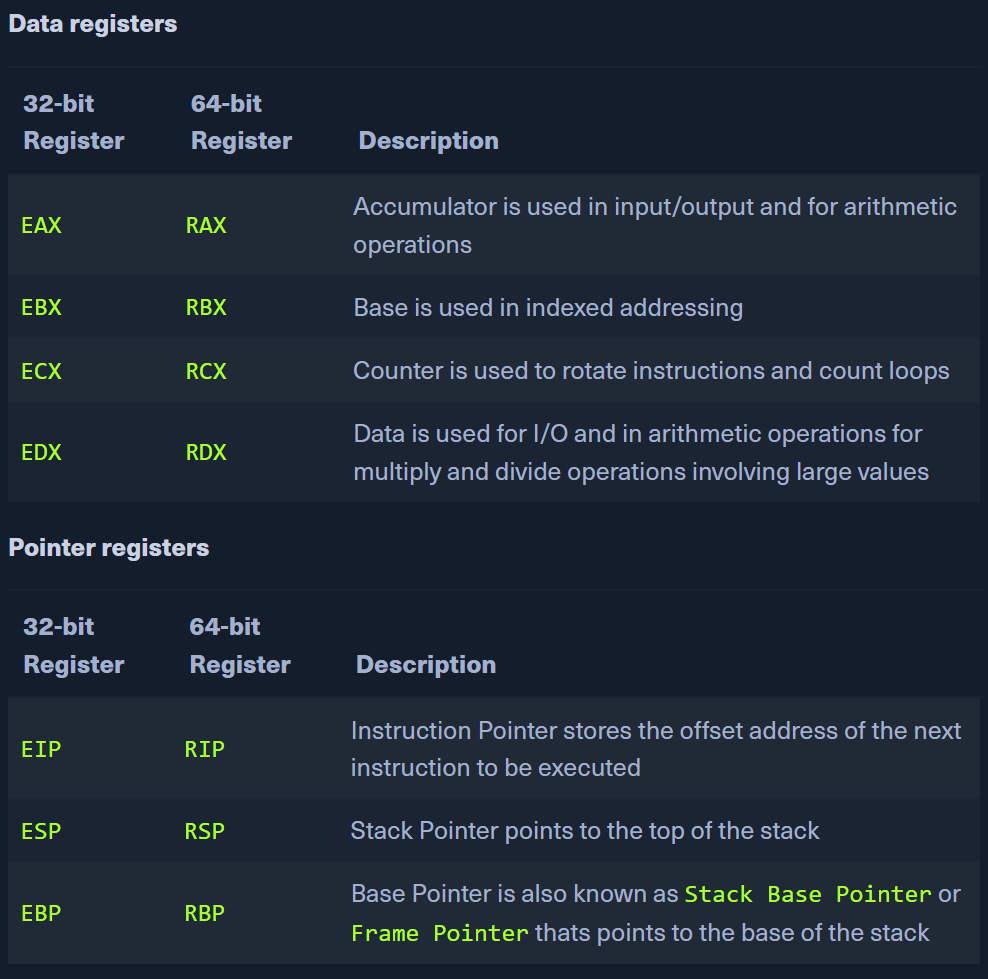
- General registers IMPORTANT
- data, pointer, index
- Control registers
- Segment registers
- General registers IMPORTANT
Stack Frames
- stack starts from a high address and grows down to a lower memory address as values are added.
- the base pointer points to the beginning of the stack.
- the stack pointer points to the top of the stack.
- As the stack grows, it is logically divided into regions called
Stack Frames,- which allocate the required memory in the stack for the corresponding function.
- A stack frame defines a frame of data with the beginning (
EBP) and the end (ESP) that is pushed onto the stack when a function is called.
Prologue
- when a new function is called.
- the previous ebp value is pushed on the stack
- the old esp value is written to ebp
- some value is subtracted from the esp to push it down
- this will create new values for ebp and esp which will be the stack frame for this function.
Epilogue
- write current ebp value to esp
- pop ebp to bring it to old ebp
- this will return us to the main() stack frame.
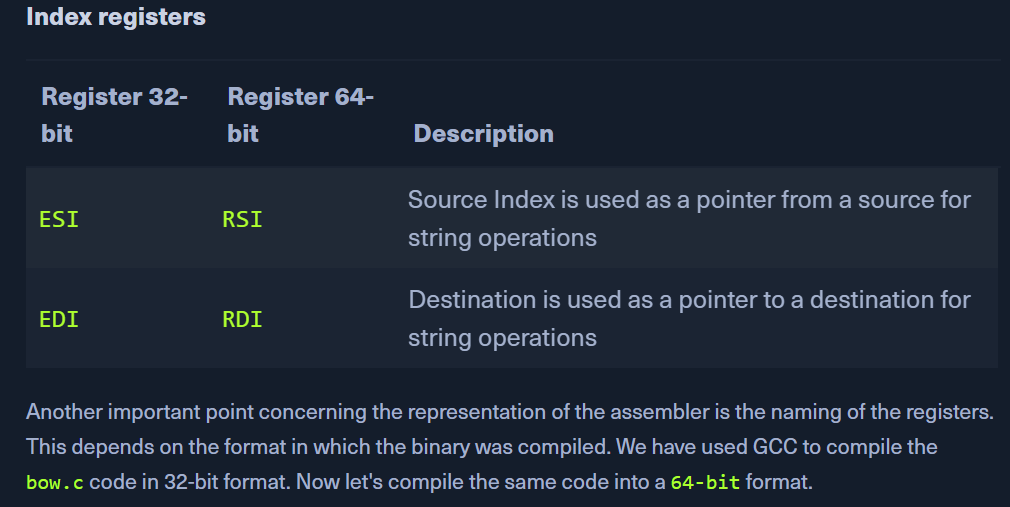
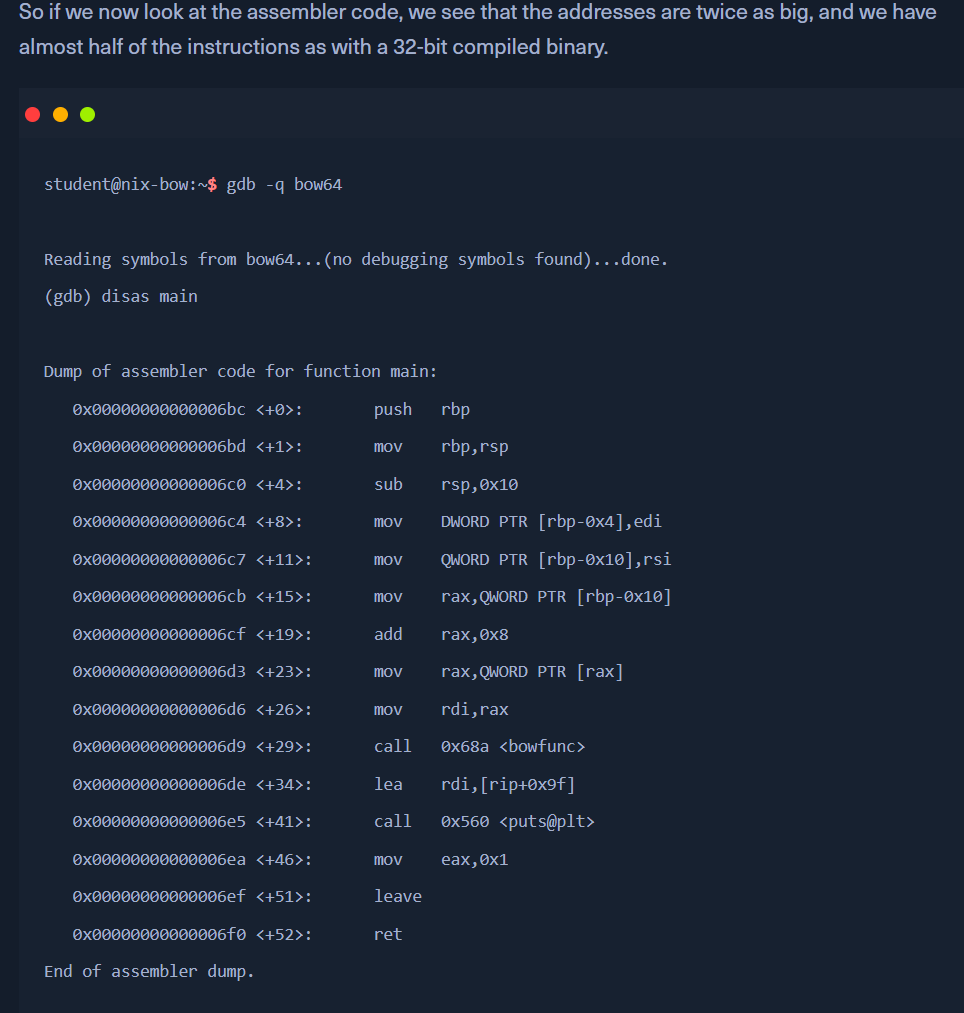
- Compiling in 64-bit
-
-