User and Machine accounts
- Local Systems (non-AD joined) and Systems in AD can have users for persons or programs (services) that can access the computer
- User can login using a username and password. The server will then provide a token
- This token will have the security content based on the privileges of the user and the groups he is a part of
Local Accounts
- stored locally on a server or workstation
- individual or group membership rights on the host
- EG local accounts created on a windows system
- Administrator : Default with installation
- guest : disabled by default
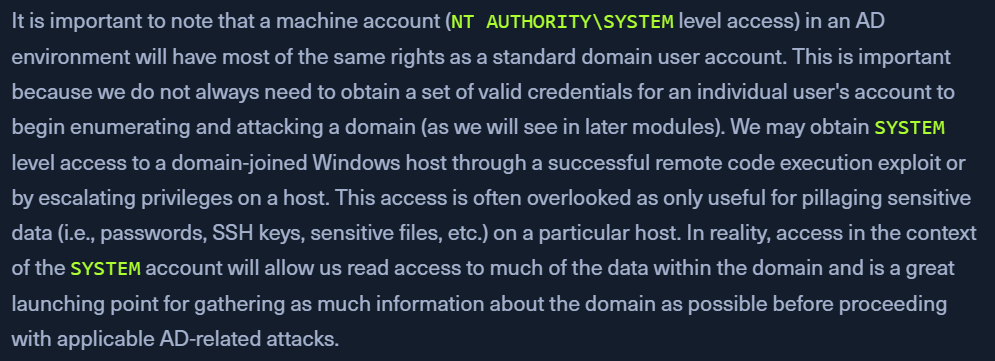
- System : SERVICE account to perform internal functions like ROOT
- Does not have a profile in
C:\Usersbut has permissions over almost everything - cannot be added to groups
- Does not have a profile in
- Network Service : predefined local account used by the Service Control Manager.
- present creds to remote services
- Local Service : used by SCM.
- minimal privileges, presents anonymous creds to the network.
Domain Users
- granted rights from the domain to access different resources within the domain like - file servers, printers, intranet hosts, other objects
- Domain user accounts can log into any host in the domain (unlike local accounts).
KRBTGTaccount is different- This account acts as a service account for the Key Distribution service providing authentication and access for domain resources.
- This account is a common target of many attackers since gaining control or access will enable an attacker to have unconstrained access to the domain.
- It can be leveraged for privilege escalation and persistence in a domain through attacks such as the Golden Ticket attack.
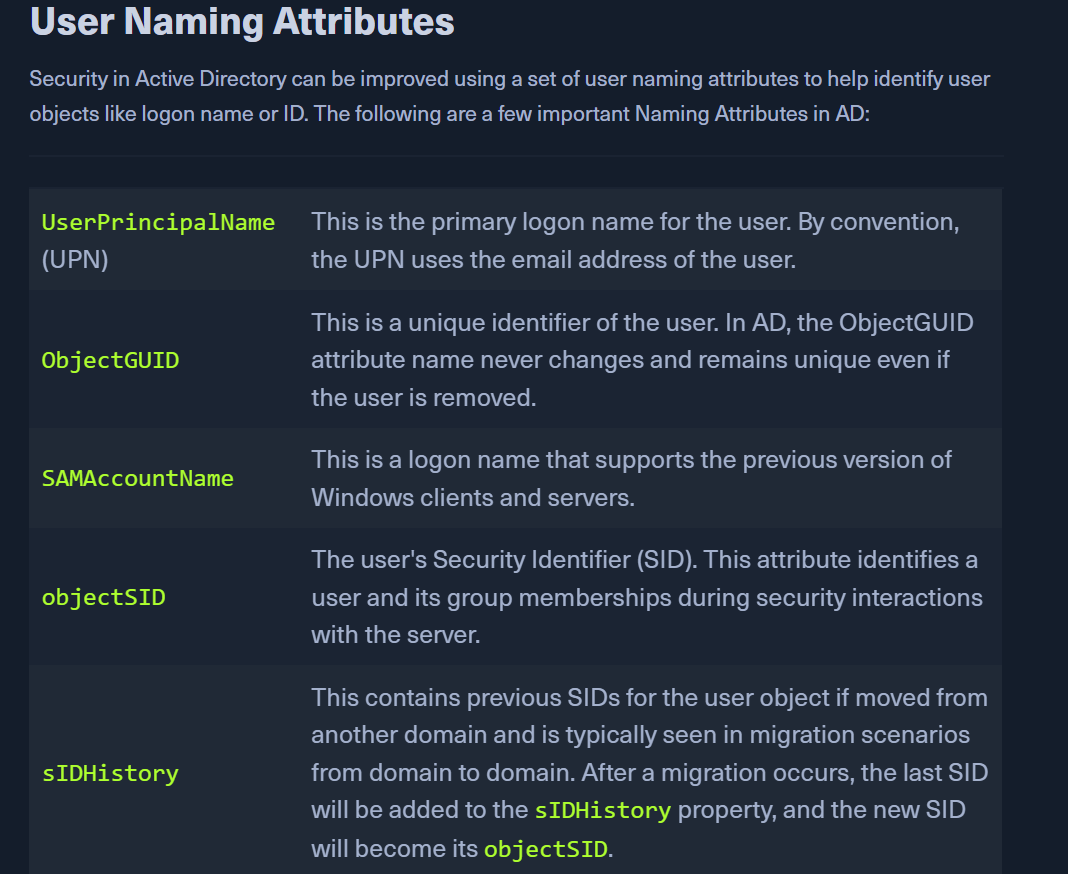
AD COMMANDS:
Get common user attributes in an AD
- Get-ADUser -Identity htb-student
- https://docs.microsoft.com/en-us/windows/win32/ad/user-object-attributes
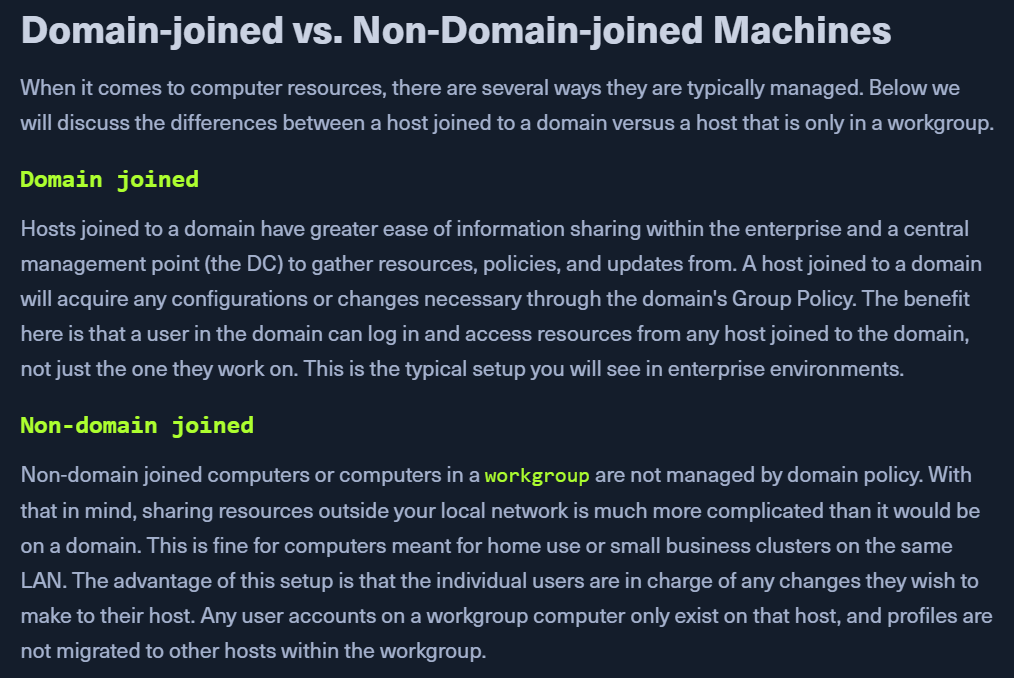
Domain joined vs Non domain joined
Using NT Authority\System for enum